Managing the Flow of Value in Service Organizations
This paper discusses the unique challenges faced by service organizations in maintaining a healthy flow of value compared to product-led organizations. The author highlights the differences between service and product organizations, emphasizing how service organizations must constantly sell and deliver their services to maintain a steady income stream, making them more susceptible to disturbances in the flow of value.
Krnic explores the evolving relationship between service organizations and their clients, noting the shift from a "body shop" approach to a more collaborative partnership. He introduces a manifesto for sustainable service organizations, which includes valuing strategic work over just "more" work, flow over headcount, missionaries over mercenaries, and community over a zero-sum approach.
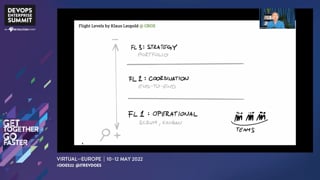
The paper also delves into the concept of "flight levels" for coordinating work within service organizations. Flight Level 1 focuses on individual team coordination, Flight Level 2 deals with coordinating multiple teams to deliver value efficiently, and Flight Level 3 involves coordinating the portfolio of projects to support organizational strategy and business goals.
Krnic provides examples from his own company, CROZ, to illustrate how implementing these flight levels has led to benefits such as reduced project escalations, decreased overtime hours, increased time invested in learning, and a focus on strategic initiatives. The paper concludes by emphasizing that optimizing the flow of value creates extra capacity for organizations to pursue their priorities and reach their goals.
What's inside
- Unique Challenges — Service organizations face distinct challenges in maintaining a healthy flow of value compared to product-led organizations.
- Collaborative Partnership — The relationship between service organizations and clients has evolved from a "body shop" approach to a collaborative partnership.
- Flight Levels — Coordinating work at three levels - individual teams, multiple teams, and project portfolio - is crucial for service organizations.
- Optimization Benefits — Optimizing the flow of value leads to reduced escalations, decreased overtime, increased learning, and strategic focus.
- Pages
- 15
- Publication Date
- May 2023
- Topics
- Leadership · Software Delivery & Architecture
- Formats
- epub · pdf
- License
- Creative Commons BY-NC-SA