Satya Addagarla, Josh Atwell (Splunk), Mik Kersten (Lymyt), Thomas A. Limoncelli (Stack Overflow), Sara Mazer, Steve Pereira, Jeff Tyree & Christina Yakomin
Adopting a “you build it, you operate it” (YBYO) model requires a company to provide an internal developer platform that enables developers to build and operate their products. This platform can standardize processes and enable (or enforce) recommended practices. However, the platform can potentially overwhelm engineers by increasing their cognitive load. This can lead to burnout, productivity problems, low morale, and high attrition. A well-built platform can reduce cognitive load and lead to enhanced productivity, making compliance with standards easy, while also becoming a competitive advantage.
A product delivery platform is not just to ship applications but to be a vehicle for standardization that can ease compliance with recommended practices and simplify the daily work of engineers, all while reducing cognitive load.
Doing it right is not easy. It puts a high burden on the platform’s creators, especially if care and attention aren’t dedicated to product management and usability. However, the investment required to provide a capable platform is amortized across teams supported by the platform, and it will grow in value like any other product. It is a requirement for success.
This paper appeals to senior technical leaders who seek to build systems that enable software-engineering teams to work at their fullest potential and quickly deliver quality software and services.
What's inside
Clear Guidance — This paper provides clear guidance to senior technical leaders looking to build systems that enable software-engineering teams deliver value safer and faster.
Expert Authors — This paper is written by expert leaders and developers who have successfully built effect developer platforms in their organizations.
Paved Road — This paper illustrates how well-built platform can reduce cognitive load and lead to enhanced productivity, making compliance with standards easy, while also becoming a competitive advantage.
Clear Tactics — This paper identifies clear tactics to use that have been proven to be effective at building developer platforms.
Multi-disciplined marketing and technology leader who has moved from hands on technology to leading marketing and advocacy teams to improve customer enablement and engagement.
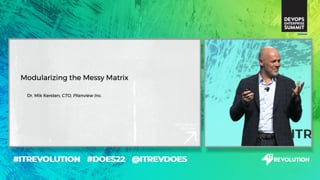
Dr. Mik Kersten is an independent technology strategist and researcher best known as the creator of the Flow Framework and author of the bestselling book Project to Product and the new book Output to Outcome. Mik founded Tasktop and led the company as CEO until its acquisition by Planview in 2022. Mik started his career as a Research Scientist at Xerox PARC as part of the team that created the first aspect-oriented programming language. He then completed his PhD in Computer Science at the University of British Columbia, where he pioneered the integration of software development and collaboration tools. That work became the foundation for Tasktop and helped shape the emerging field of Value Stream Management. Before shifting his focus to flow, outcomes, and organizational modularity, Mik wrote more than one million lines of open-source code that are still in use today. His work now focuses on helping leaders transition from output- driven management to outcome-driven operating models, enabling organizations to harness the power of AI in a human-centric way. For more information, please visit the book‘s website at https://outputtooutcome.org/ .
Steve Pereira has spent over two decades improving the flow of work across organizations. He’s worked through tech support, IT management, build and release engineering, and as a founding CTO for enterprise SaaS. He serves as lead consultant for Visible Value Stream Consulting, as a board advisor to the Value Stream Management Consortium, Chair of the OASIS Value Stream Management Interoperability technical committee, and co-founder of the Flow Collective to bring flow-focused professionals together. Since 2017, he has been developing and facilitating Flow Engineering to make flow improvement in large organizations accessible, collaborative, and actionable.
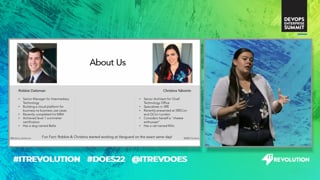
Christina Yakomin is a Senior Manager in Vanguard’s Chief Technology Office, leading the Performance and Resilience Optimization team. She has worked at the company’s Malvern, PA, headquarters since graduating from Villanova University with an undergraduate degree in Computer Science. Throughout her career, she has developed an expansive skill set in front- and back-end web development, as well as cloud infrastructure and automation, with a specialization in Site Reliability Engineering. Christina has also worked closely with the Women’s Initiative for Leadership Success at Vanguard, volunteering both internally at the company and externally in the local community to further the career advancement of women and girls—in particular within the tech industry. She has previously shared her technical expertise at many conferences and events, including AWS re:Inforce, QCon, SRECon, and the Enterprise Technology Leadership Summit. In her spare time, Christina is passionate about traveling; she has visited twenty-seven different countries and thirty-two US states so far!