DevOps for Salesforce and Other Low-Code Platforms
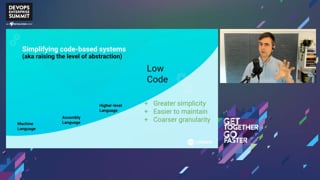
The paper discusses the evolution and challenges of applying DevOps principles to low-code platforms, focusing on Salesforce as a prime example. Low-code SaaS platforms like Salesforce have become increasingly popular, enabling innovation and application development by a wider range of users, including non-coders. Salesforce has evolved from a simple CRM to a highly customizable platform with a large ecosystem of apps and a passionate developer community. However, the ease and speed of customization in Salesforce has led to an explosion of complexity in many organizations, with millions of customizations becoming difficult to manage and maintain.
Traditional DevOps tools and practices are not always well-suited to the unique characteristics of the Salesforce platform, and adapting DevOps for Salesforce is an emerging discipline. Salesforce has made strides in supporting DevOps practices through initiatives like Salesforce DX, improving metadata coverage, and promoting the use of version control and automation. However, challenges remain due to the platform's tight coupling and dependencies.
The growing complexity of Salesforce implementations necessitates the application of software engineering disciplines and DevOps practices, but tooling must be adapted to match the skills and expectations of the Salesforce community, which includes many non-coders. In summary, the paper highlights the need for and challenges of applying DevOps principles to manage the complexity of low-code platforms like Salesforce as they scale, emphasizing the importance of adapting practices and tooling to the unique characteristics of these platforms and their user communities.
What's inside
- Practical Application — Gain insights into the challenges and opportunities of applying DevOps to low-code platforms like Salesforce.
- Real World Example — Learn how Salesforce's evolution has led to increased complexity and the need for adapted DevOps practices.
- Clear Guidance — Discover the importance of tailoring DevOps tools and practices to the unique needs of low-code platforms.
- Change Agents — Understand the significance of engaging non-coders in the DevOps process for successful implementation.
- Pages
- 19
- Publication Date
- May 2022
- Topics
- Software Delivery & Architecture
- Formats
- epub · pdf
- License
- Creative Commons BY-NC-SA